Large sporting events like the Super Bowl, World Cup, and NBA Finals aren’t just another game. It’s one of the few moments where casual fans, die-hard supporters, and social groups are all looking for the same thing at the same time: a great place to watch the game.
According to a Kantar study, 73% of consumers are willing to try new restaurants during major sports events.
For bars, that’s a huge commercial opportunity.
And it’s not just individuals heading out, it’s groups making decisions together.
For example: 63% of people who watch big sporting events, like the World Cup, do so in groups of 3 or more.
That means customers aren’t just choosing a bar – they’re choosing the place for their group to have a memorable experience.
But here’s the reality: the venues that win aren’t just the ones showing the games -- they’re the ones fans can actually find.
During major sporting events, fan behavior shifts. Planning becomes more intentional. In fact, according to that same Kantar study, 78% of sports fans say they would go out more often if it were easier to plan ahead for major events.
People don’t just “end up” in a bar - fans actively search, compare, and choose where to watch.
That means:
If your bar is visible across those touchpoints, you’re in the running. If it’s not, you’re invisible, even if you’re showing every game.
Let’s be clear about the difference:
If you promote major sporting events effectively:
If you don’t:
This isn’t about whether you’re showing the games. It’s about whether fans know you are.
To win, you need to think like a fan. And fans don’t rely on just one channel. They move between multiple, often in the same decision journey.
1. Online search: the starting point for intent
When someone decides they want to watch a match, their first move is search.
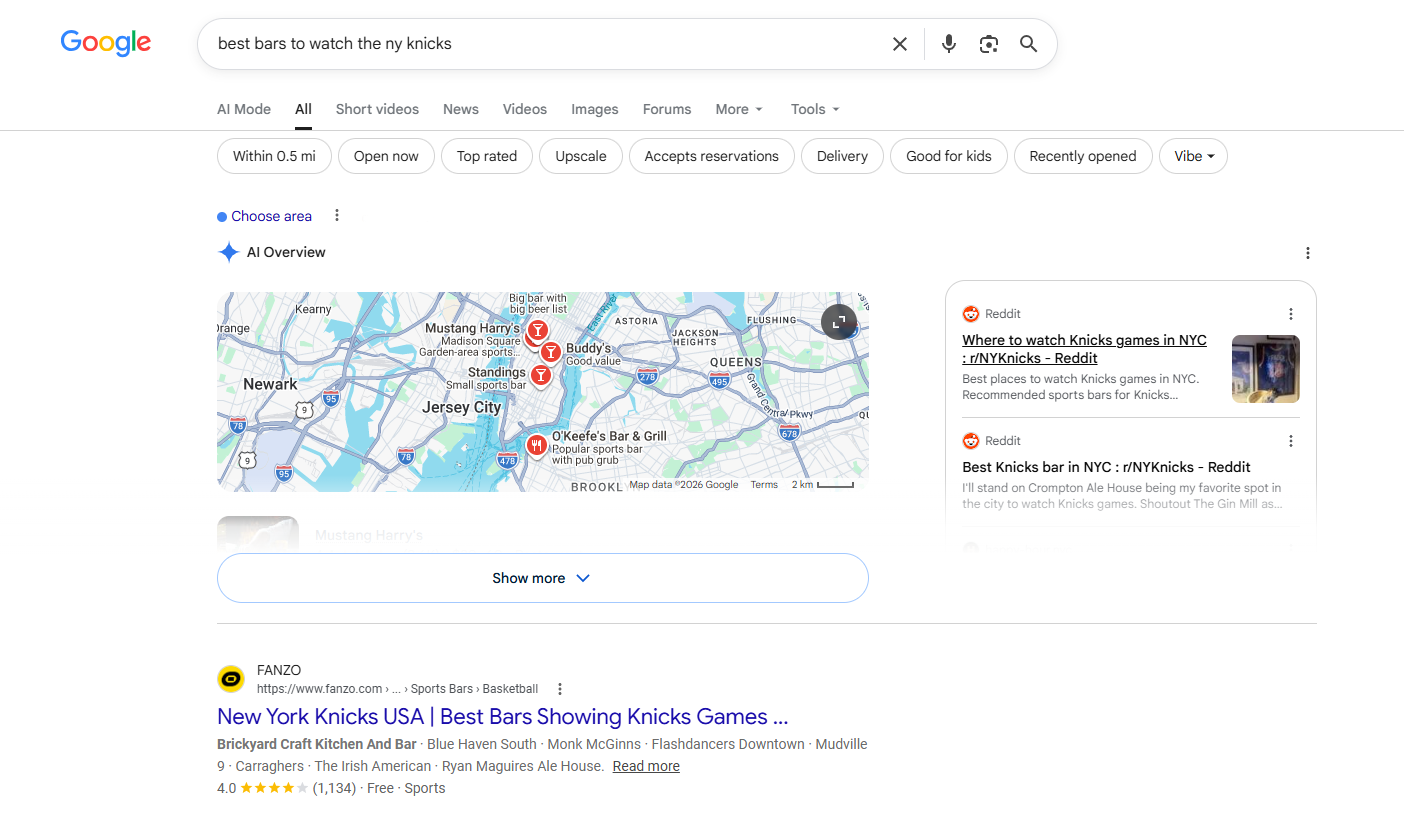
That might be Google, or increasingly, AI tools like ChatGPT or Claude – where people ask direct questions like:
This is high-intent behavior. They’re not browsing, they’re deciding.
And the venues that appear here are the ones that turn that intent into real customers through the door.
If your bar isn’t showing up with clear, accurate information, those customers will simply choose somewhere else – aka your competitors.
Search is changing, but the behavior is the same.
Whether it’s traditional search or AI tools, the pattern is consistent: people want quick, trusted answers on where to go.
That means visibility now depends on being part of the platforms and systems that power those answers - not simply having a website.
2. Social Media: discovery and validation
Social platforms are where fans:
And atmosphere really matters here.
In fact, atmosphere is 10x more important than food and drink when choosing where to watch sports.
That’s why social plays such a big role, it helps guests see what your venue feels like before they commit.
Different audiences behave differently, too:
If you’re not posting your game schedules or promoting gamedays, you’re not in the conversation.
3. Your bar’s website: the final decision-maker
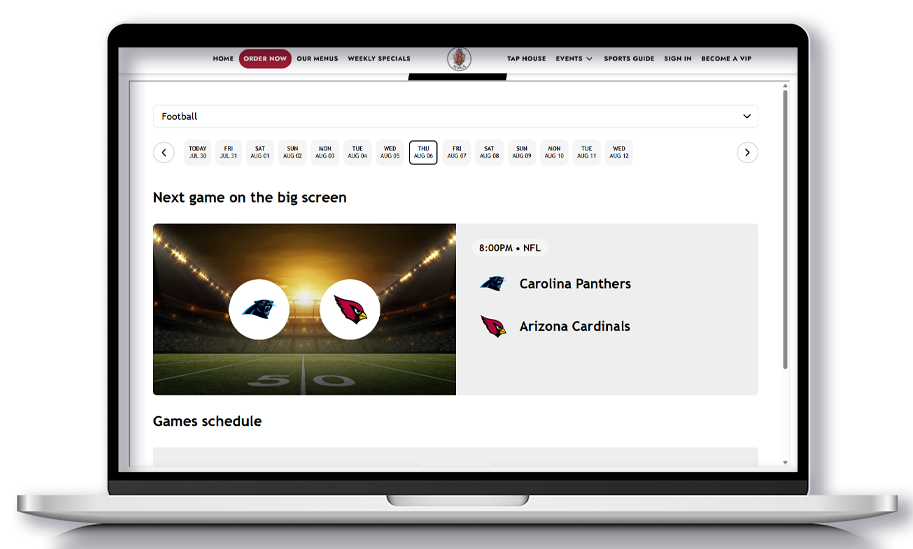
Before committing, most fans will check your website.
They’re looking for:
Around 80% of customers check a venue’s website before deciding where to go.
At this stage, they’re not browsing, they’re confirming.
If your game schedule isn’t clear or up to date, that uncertainty is often enough to send them elsewhere.
Your website isn’t just informational - it’s where decisions get locked in.
4. In-venue screens & POS: capturing the next visit
Not every decision is made in advance.
Fans already in your venue will:
Posters, screens, and table tents turn:
Without this, you’re missing the easiest wins.
5. Email marketing: activating your existing audience
Your database is your most valuable audience, people who already know and like your venue.
Email allows you to:
Different demographics engage differently:
Email drives consistency, especially across midweek and lower-profile games.
Fans don’t all behave the same way.
Most use a combination of all of the above.
When we asked fans how they find places to watch sport, there wasn’t a clear winner.
Search, social, websites, and platforms like FANZO all came out at roughly the same level, around 35% each.
There isn’t one channel that drives decisions -- customers use a mix.
Which means: If you’re only showing up in one place, you’re only reaching part of your audience.
The venues that see the biggest results during major sporting events are the ones that:
Running a bar during major sporting events is already full-on.
Managing:
…on top of everything else?
It’s not realistic for most operators.
And that’s exactly why many venues don’t fully capitalize on the opportunity.
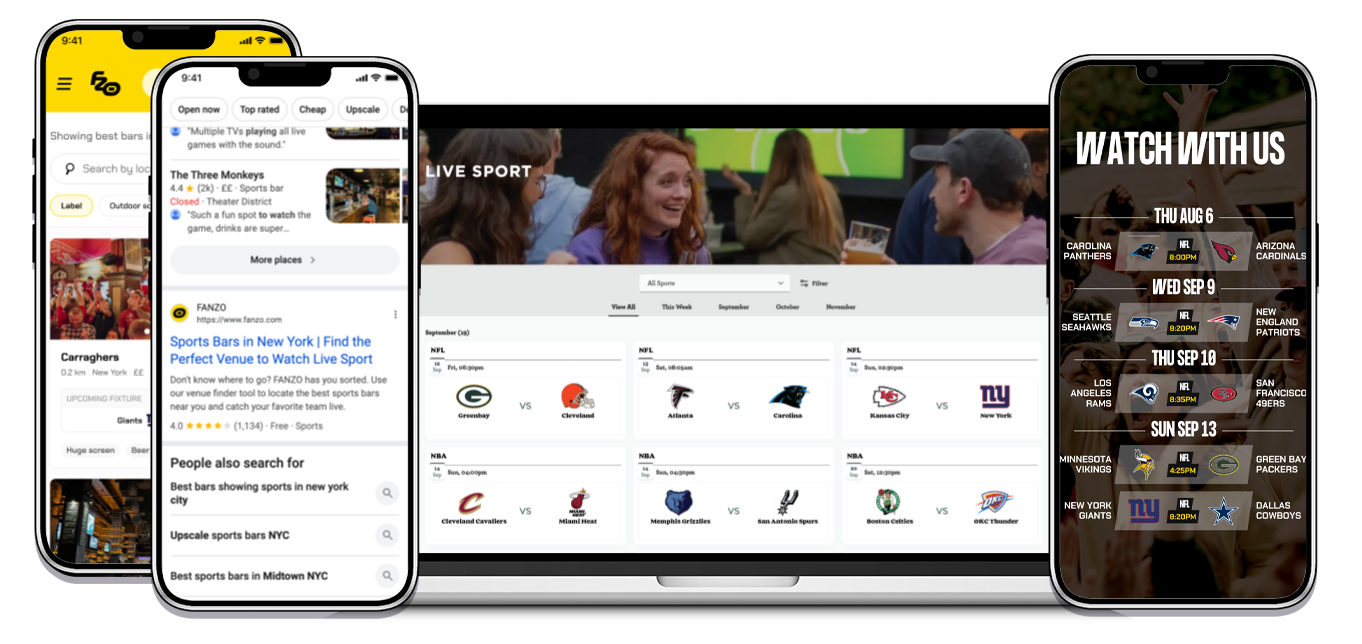
This is where FANZO Venues comes in.
FANZO Venues is built specifically around how fans find places to watch sports and it takes care of the heavy lifting for you.
Once set up, it:
You get the benefits of a large sports bar marketing plan without the workload.
Major events like the Super Bowl and NBA Finals will bring thousands of fans looking for somewhere to watch.
The question is simple: Will they find your bar, or someone else’s?
The venues that win won’t just be showing the games. They’ll be the ones that made sure fans knew exactly where to go.
And with the right tools in place, that doesn’t have to mean more work, just smarter visibility.