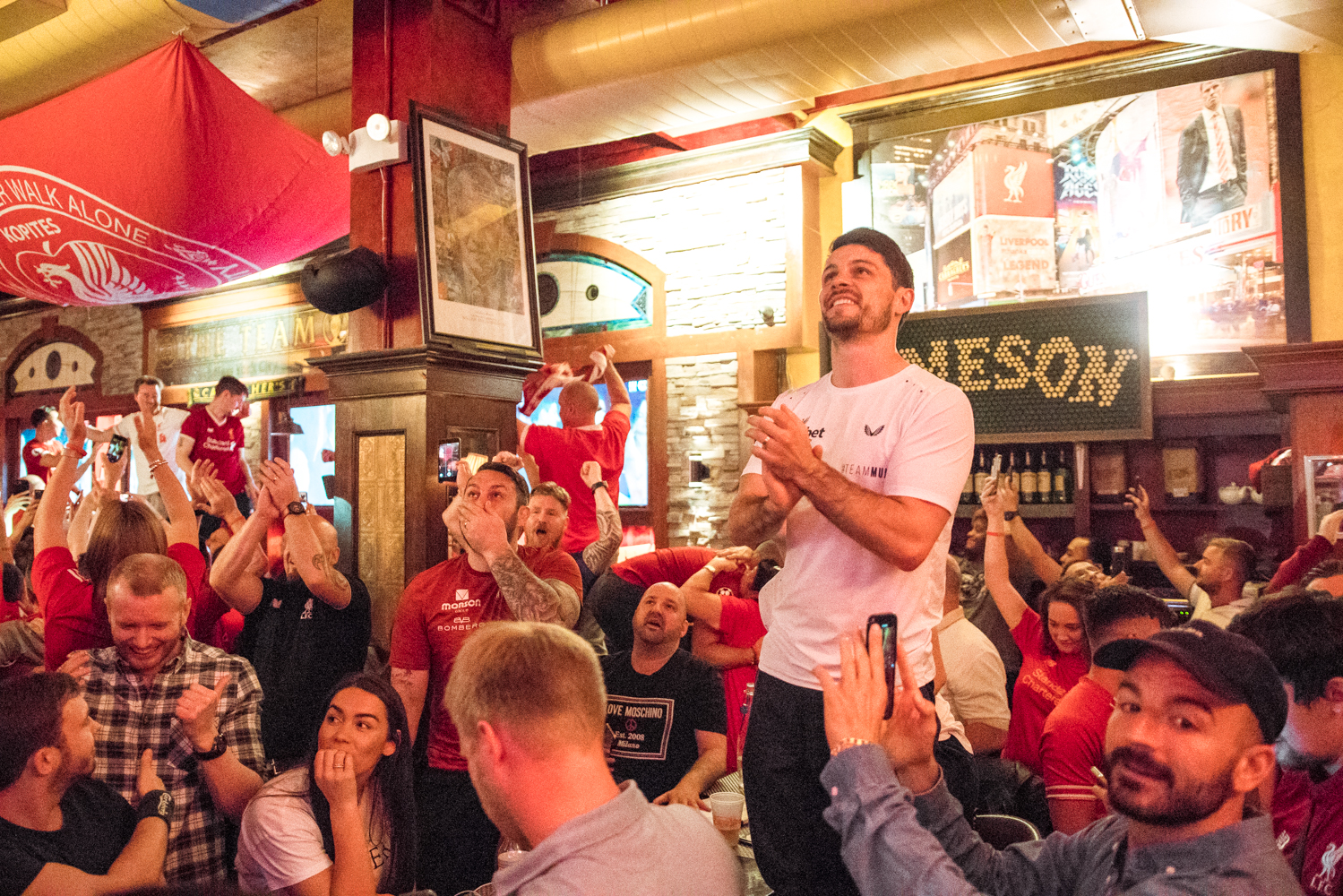
The next World Cup won’t just be big for sports bars. It’s a massive opportunity for experiential venues too.
Because unlike a standard Saturday afternoon kick-off, many World Cup fixtures will land later in the day. That creates a very different customer journey.
Fans won’t necessarily be looking to sit in the same pub for five hours before kick-off, they’ll be looking for somewhere to spend the build-up, meet friends, eat, drink and do something before settling in to watch the match.
That’s where experiential venues come in.
Whether it’s darts, shuffleboard, bowling, gaming, mini golf or interactive bars, experiential venues are perfectly placed to become part of the matchday occasion. But there’s one important catch:
Fans need to know you’re showing the game.

During major tournaments, fan behaviour changes dramatically.
People stop relying on “their usual spot” and start actively searching for venues showing specific matches. That becomes even more important in cities where there are huge international communities looking for somewhere to watch their home nation.
If you’re an England or Scotland fan, it’s relatively easy to assume lots of places will have the game on.
But if you’re supporting Canada, Ghana, Turkey or Australia? Fans are far more likely to actively search for venues showing that specific fixture before they decide where to go.
And increasingly, they’re doing that through tools like:
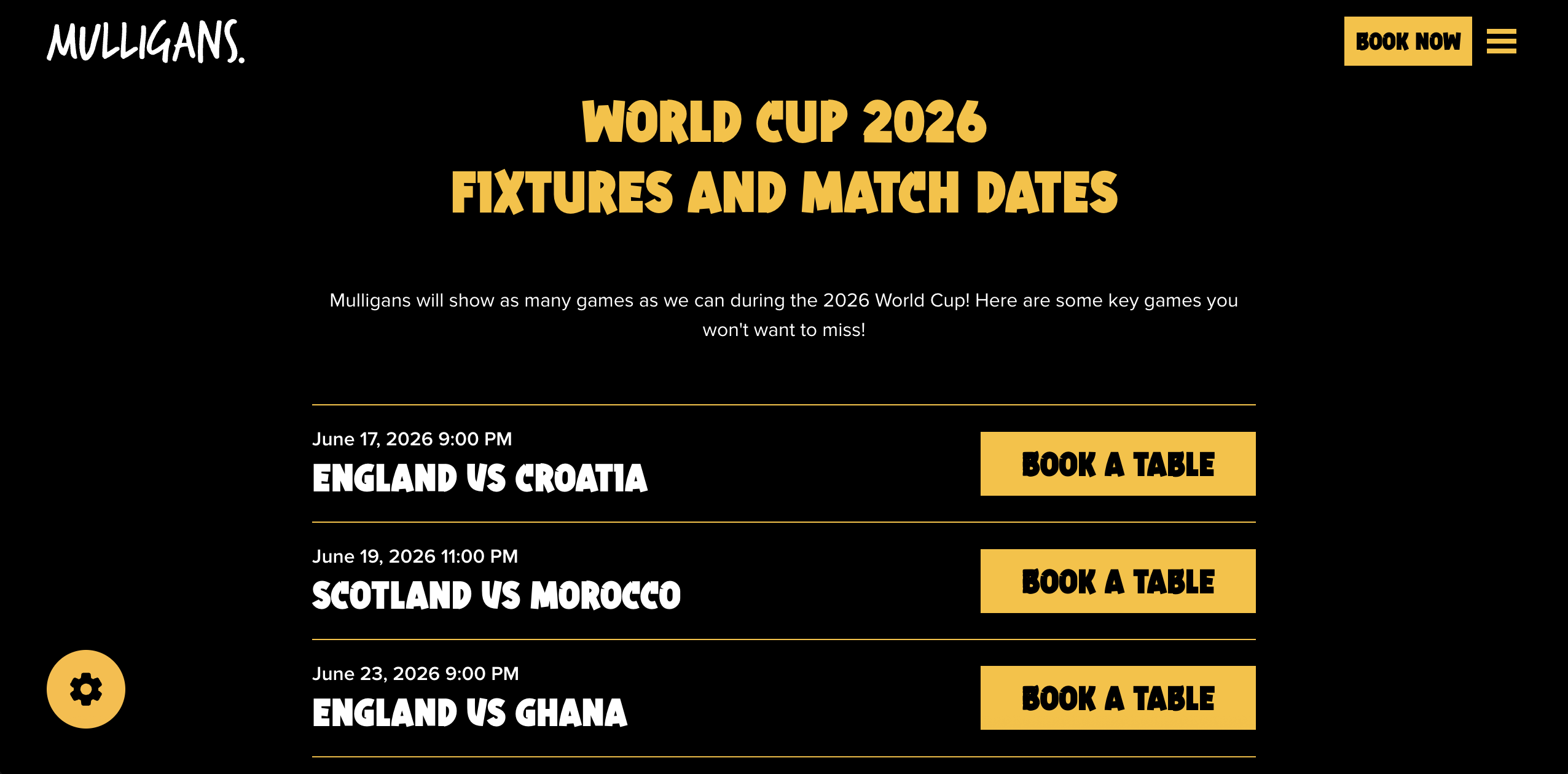
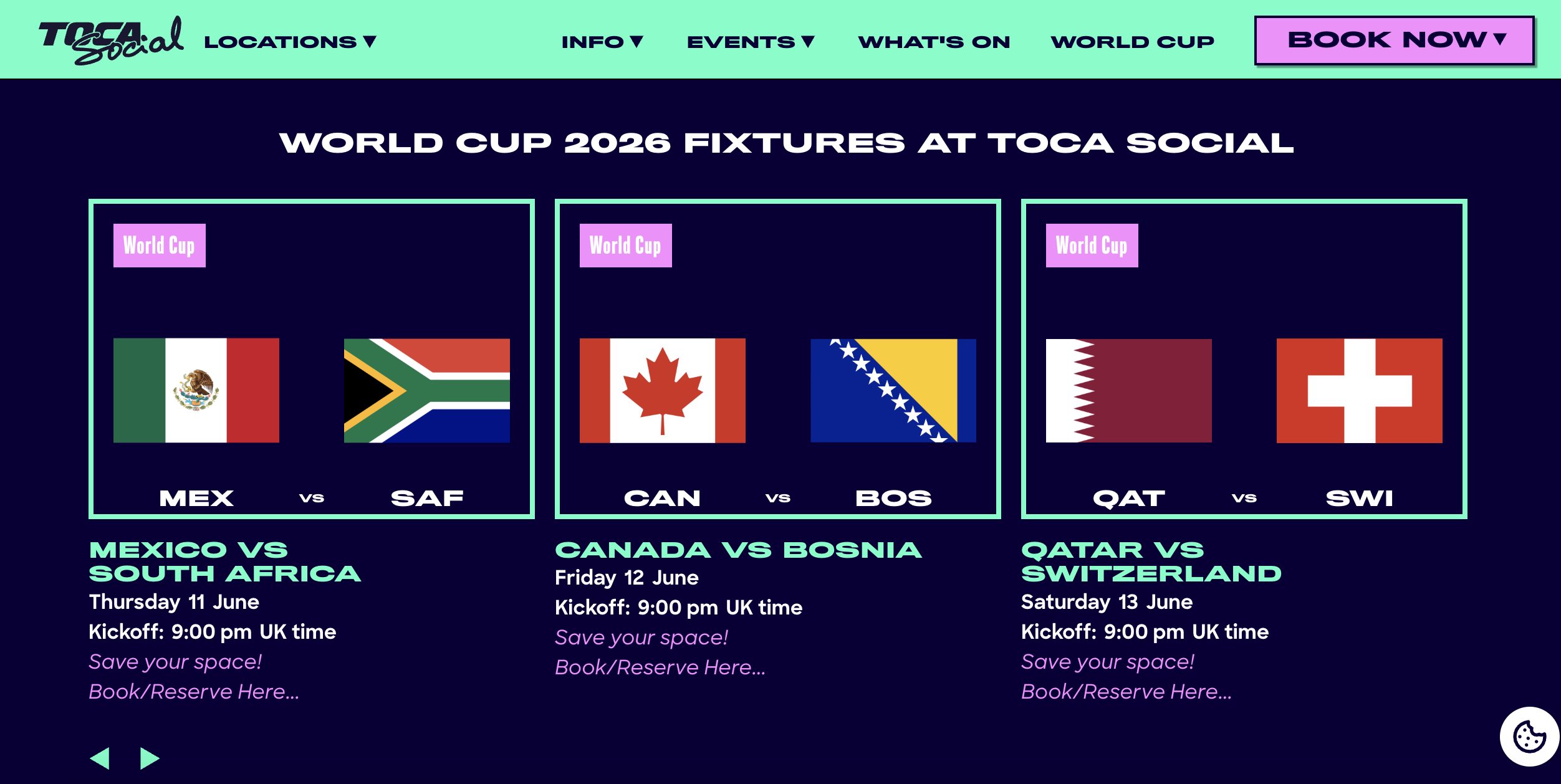
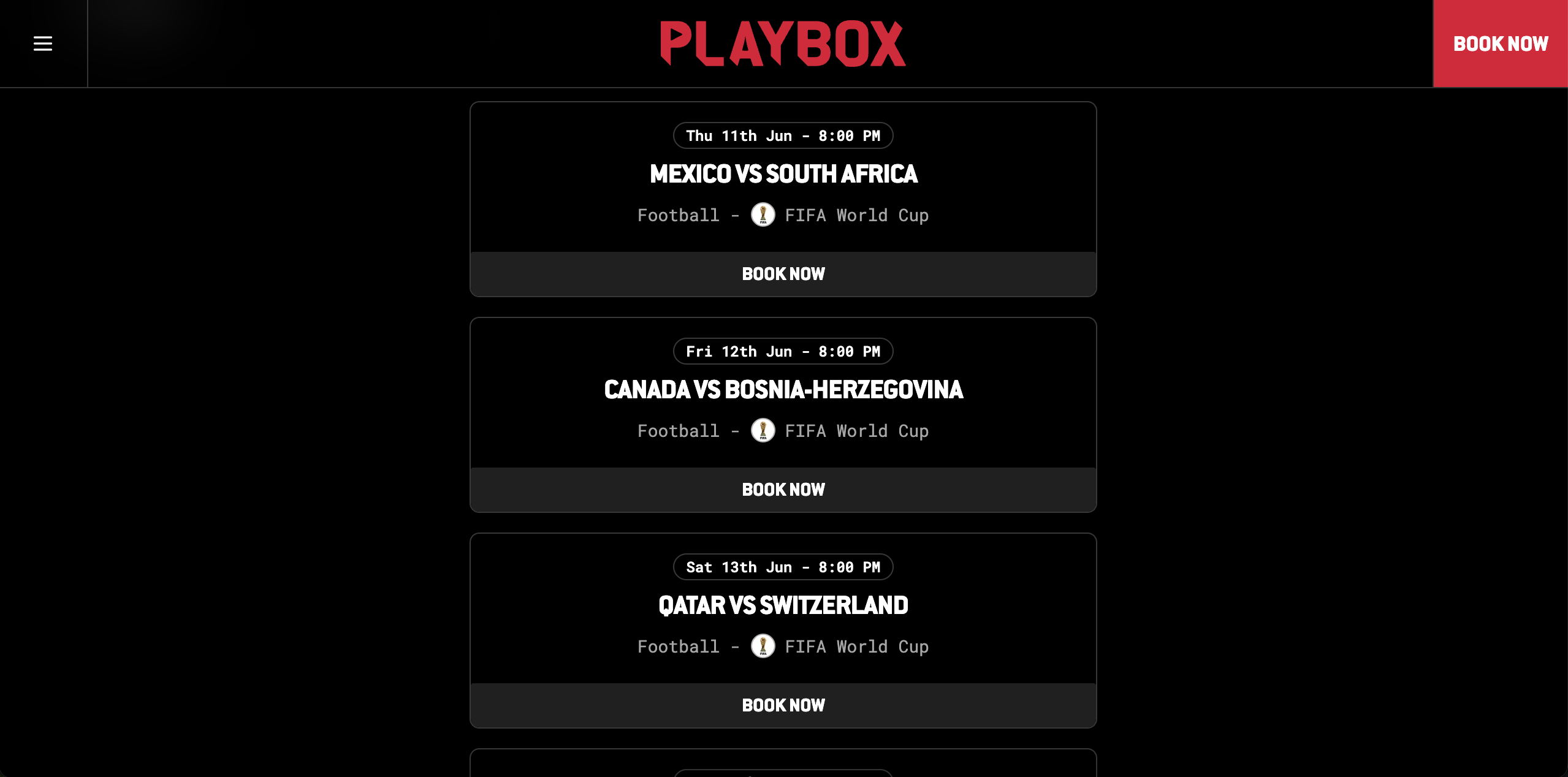
The venues that clearly publish their fixtures across these channels are the ones that get discovered.

This is where experiential venues often miss out.
Many already have:
But from a fan’s perspective, they’re often not known as sports venues.
That means unless your fixtures are clearly visible online, fans simply won’t connect the dots.
A group searching:
“Where can we watch Brazil vs Portugal after shuffleboard?”
or:
“Bars showing Nigeria games near me”
needs an immediate answer.
And in major tournaments, visibility matters more than loyalty.
The biggest opportunity for experiential bars isn’t necessarily converting die-hard sports fans.
It’s capturing groups who want the full evening.
For late kick-offs especially, fans are looking for:
Experiential venues naturally fit that behaviour.
But if your venue isn’t publishing fixtures consistently, many fans will never realise you’re an option.
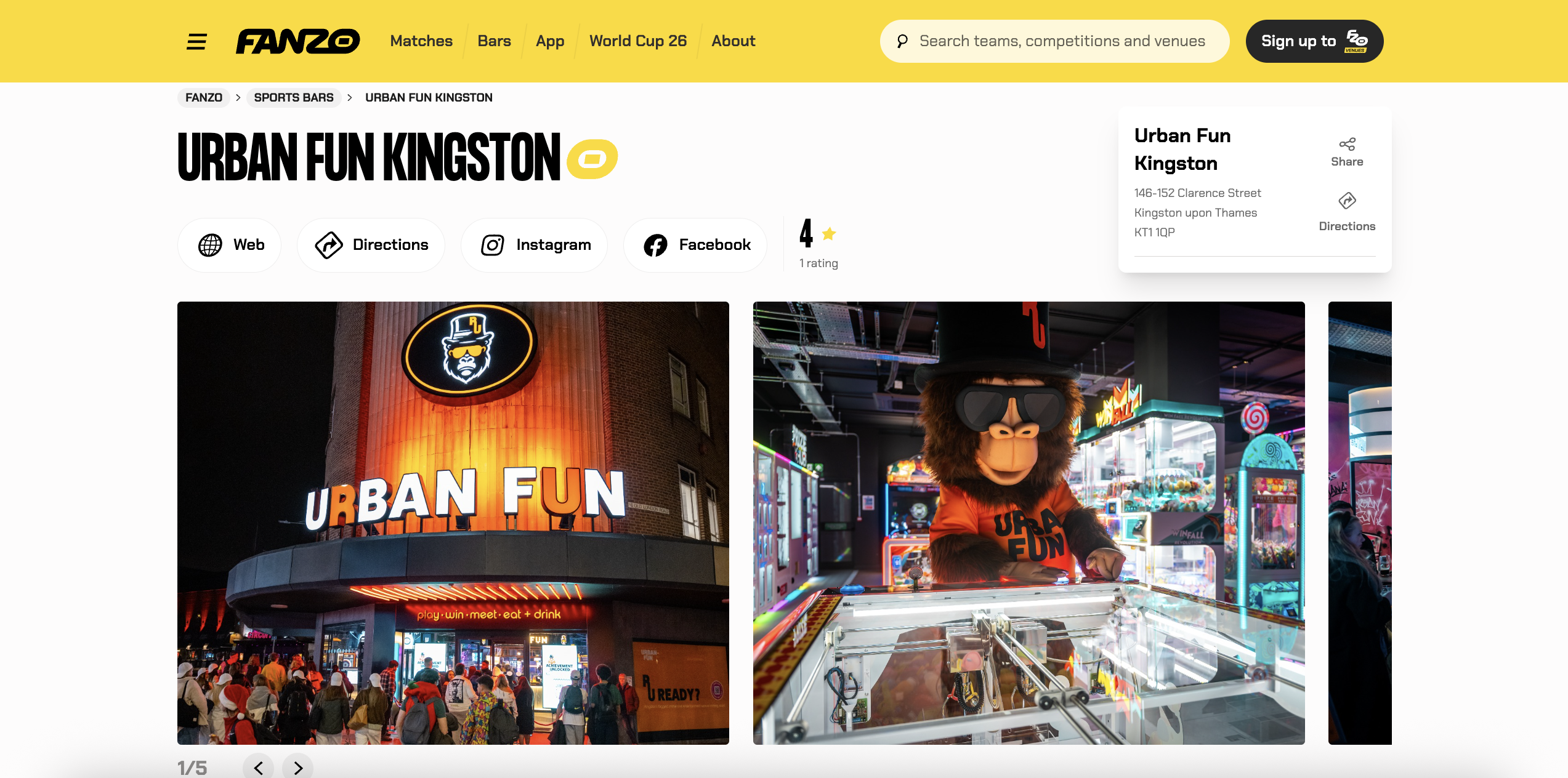

One of the biggest changes in fan behaviour over the last few years is that discovery is now fragmented.
Fans don’t just check one place anymore.
They might:
That’s why having structured, accurate fixture information online matters so much.
When venues consistently publish what they’re showing, they dramatically increase the chances of appearing in searches around:
And for experiential venues specifically, that visibility can completely change perception.
You stop being:
“That activity bar that might have TVs”
and become:
“That place showing the game where we can also do something beforehand.”
That’s a powerful difference during a tournament.
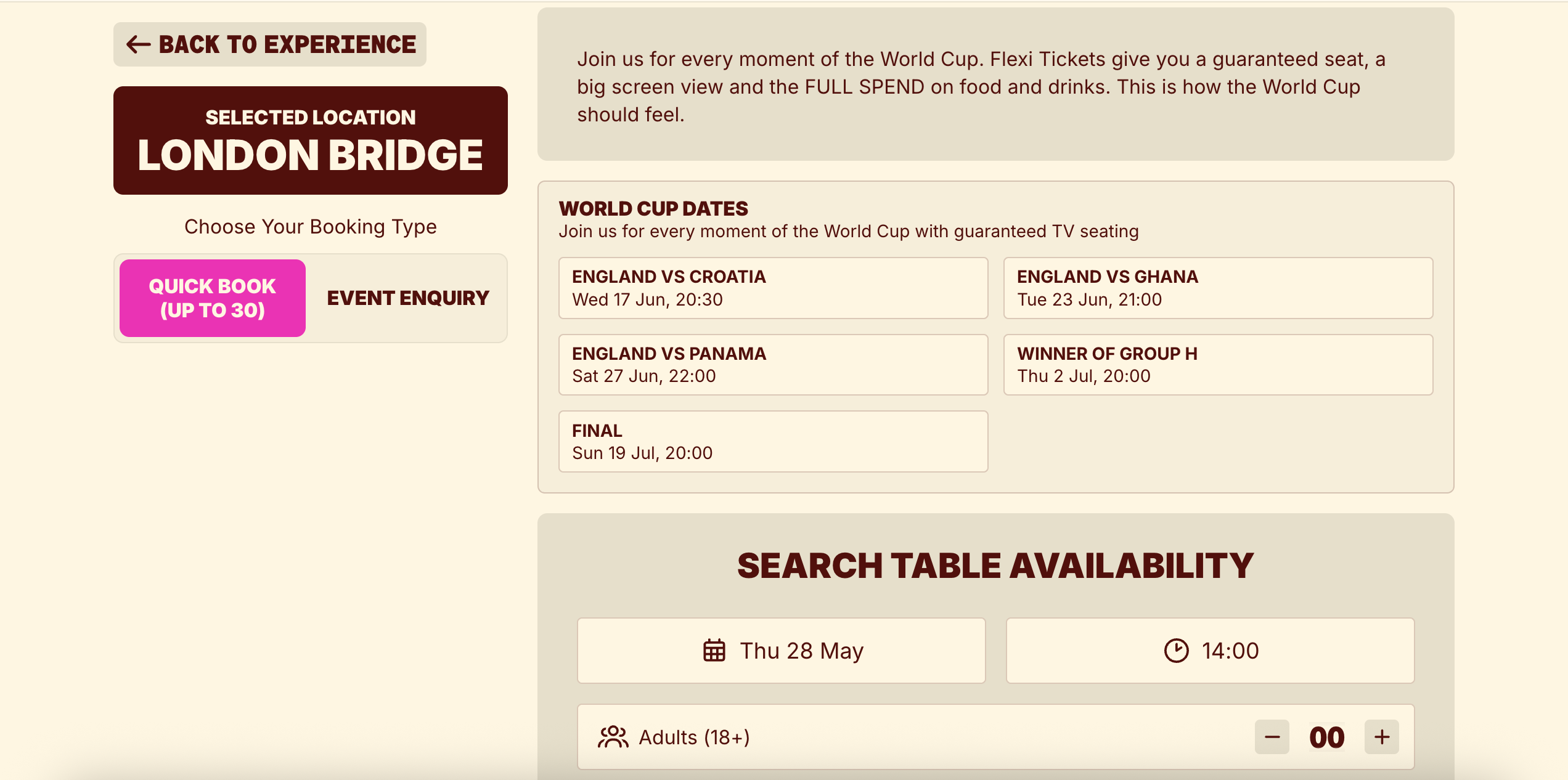
The World Cup is bigger than sport
For many fans, especially international communities in major cities, tournament football is social infrastructure.
People organise days and nights around fixtures.
Groups travel across cities to watch games together.
Communities actively search for venues showing their nation’s matches.
And because experiential venues are often located exactly where these audiences already socialise, they’re uniquely positioned to benefit - if fans can actually find them.
The venues that make their fixture information visible early, consistently and across multiple channels will give themselves a huge advantage long before the first ball is kicked.
And for experiential venues, the World Cup might be less about becoming a “sports bar”, and more about becoming the obvious answer for fans looking for a complete matchday experience.